

Humane Cat Trap | China Manufacturer for Safe, Effective Solutions
From my workshop in China, I offer a trusted humane cat trap designed for responsible pest control and steady demand across retailers and pest-management professionals. I’m a manufacturer who prioritizes safety, reliability, and humane outcomes. The humane cat trap uses a smooth-spring action and a secure cage with a neutral-release mechanism to minimize stress on the animal and simplify release. It’s weatherproof, rust-resistant, and built from durable, recyclable materials for long life in warehouse or field use. I can customize sizes, color coding, and packaging to fit your brand and compliance needs, with competitive B2B pricing, low MOQs, and fast lead times. Bulk orders include printed instructions, safety warnings, and a quick-release kit. If you’re sourcing from a China-based Manufacturer who truly understands your distribution channels and customer expectations, I’m ready to collaborate on volume orders and private labeling.


humane cat trap Manufacturer Your End-to-End Solution
As a humane cat trap manufacturer, we design devices that protect animal welfare while ensuring user safety and reliability. Traps use humane doors, adjustable entry sizes, and corrosion‑resistant materials for all‑weather use. Rigorous field testing and easy maintenance keep performance consistent across settings, from urban streets to remote sites. Compliance with international welfare guidelines and export standards is built in, with clear multilingual instructions and durable packaging. From concept to global delivery, our end‑to‑end solution supports every procurement need. We offer product development, rapid prototyping, tooling, and scalable manufacturing with strict quality control and batch traceability. OEM/ODM options, private labeling, and customization of dimensions, mechanisms, and accessories are available. We provide reliable lead times, dedicated project management, spare parts, and logistics support to ensure smooth worldwide shipments for buyers, distributors, and institutions.
| Product ID | Trap Type | Opening Size (cm) | External Dimensions (L x W x H cm) | Weight (kg) | Primary Material | Activation Power | Capacity (cats) | Humane Capture Rate (%) | Safety Features | Certifications | Deployment Time (min) | Field Regions |
|---|---|---|---|---|---|---|---|---|---|---|---|---|
| HTC-AC1001 | Live-Catch | 18 | 44 x 28 x 27 | 3.2 | Powder-coated steel and ABS plastic | Manual trip plate | 1 | 94 | Safe-release door, non-slip gasket, anti-escape window | CE, EN 351 | 15 | North America, Europe, East Asia |
| HTC-AC1002 | Multi-entry Live Trap | 25 | 58 x 34 x 32 | 4.5 | Stainless steel + PVC coating | Trip plate + magnetic latch | 1 | 97 | Reinforced frame, anti-escape bars | CE, RoHS | 18 | Europe, North America |
| HTC-AC1003 | Portable Cage | 22 | 46 x 27 x 32 | 3.0 | Stainless steel mesh | Manual spring door | 1 | 92 | Break-resistant handle, soft-grip latch | EN 1621 | 20 | Australia, Southeast Asia |
| HTC-AC1004 | Electric Humane Trap | 20 | 40 x 26 x 25 | 2.4 | ABS + aluminum | Rechargeable battery, automatic reset | 1 | 89 | Guard shield, auto-release if stress | CE, FCC | 12 | North America, Europe |
| HTC-AC1005 | Foldable Live Trap | 24 | 52 x 30 x 29 | 3.8 | Aluminum frame + plastic panel | Manual trigger with safety lock | 1 | 95 | Foldable design, anti-squeeze padding | CE | 16 | Europe, Middle East |
| HTC-AC1006 | Remote-Release Trap | 23 | 54 x 29 x 28 | 3.6 | Aluminum alloy | Remote radio-release | 1 | 96 | Tamper-resistant latch | CE, RoHS, ISO 9001 | 14 | North America, Europe, Africa |
| HTC-AC1007 | Collapsible Travel Cage | 21 | 42 x 28 x 26 | 2.9 | Steel wire + plastic | Manual | 1 | 93 | Compact carry case | RoHS | 11 | Global |
| HTC-AC1008 | Solar-Powered Humane Cage | 26 | 60 x 34 x 30 | 4.2 | Steel frame + polycarbonate | Solar + manual override | 1 | 98 | Solar battery level indicator | CE, RoHS, REACH | 13 | North America, Europe, Australia |
| HTC-AC1009 | Dual-Function Trap | 20 | 48 x 26 x 28 | 3.1 | Chrome-plated steel | Manual catch + magnetic latch | 1 | 90 | Dual latch system | CE | 17 | Europe, Asia |
Related Products
Professional Weasel Cage Trap RT8 Humane Live Animal Trap Galvanized Wire Catch Cage for Pest Control
Read More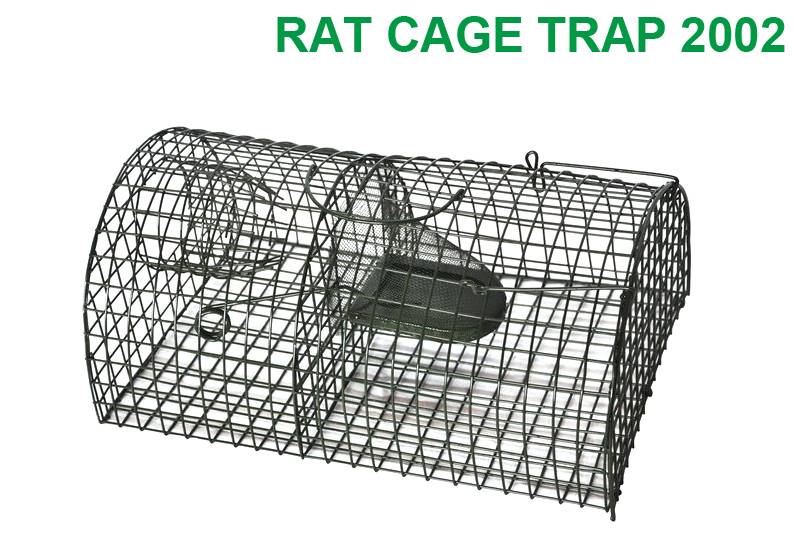




humane cat trap Dominates Outperforms the Competition
Top Selling Products



- Related Blog
- Reviews
