JingLong Making Pest Control Easier
The placement location of mouse traps directly determines the rodent-catching efficiency and food safety compliance. Many enterprises fall into placement misunderstandings, leading to “failure to catch mice” or “triggering contamination risks”. Below are the key points for scientific placement.
Have you fallen into these 3 major misunderstandings in placing mouse traps?
Misunderstanding I.Placing them randomly in open areas without considering the habits of mice
Rodents (such as Norway rats and roof rats) prefer to move along “hidden and supported” paths like walls, equipment bases, and pipe edges, and dislike open, unobstructed areas. If mouse traps are placed in open spaces such as the center of a workshop or the middle of a passage, rodents will actively avoid them, resulting in an extremely high “trap vacancy rate”.

Misunderstanding II.Failing to avoid food contact areas without taking isolation measures
To catch mice “close by”, some enterprises place mouse traps directly in food contact areas such as under shelves in raw material warehouses or beside production lines, without setting up physical isolation (e.g., rat-proof boards, protective nets). Once a mouse is caught, mouse carcasses, feces, or detached parts of the traps may contaminate food or food contact surfaces.
Misunderstanding III.Fixed in the same position for a long time without dynamic adjustment
Rodents have a “vigilance memory” — if mouse traps are fixed in the same position for a long time (even if mice have been caught there before), subsequent rodents will recognize and avoid the area; in addition, operations such as workshop equipment cleaning and raw material handling may change rodents’ activity paths, and fixed positions will render the mouse traps “ineffective”.
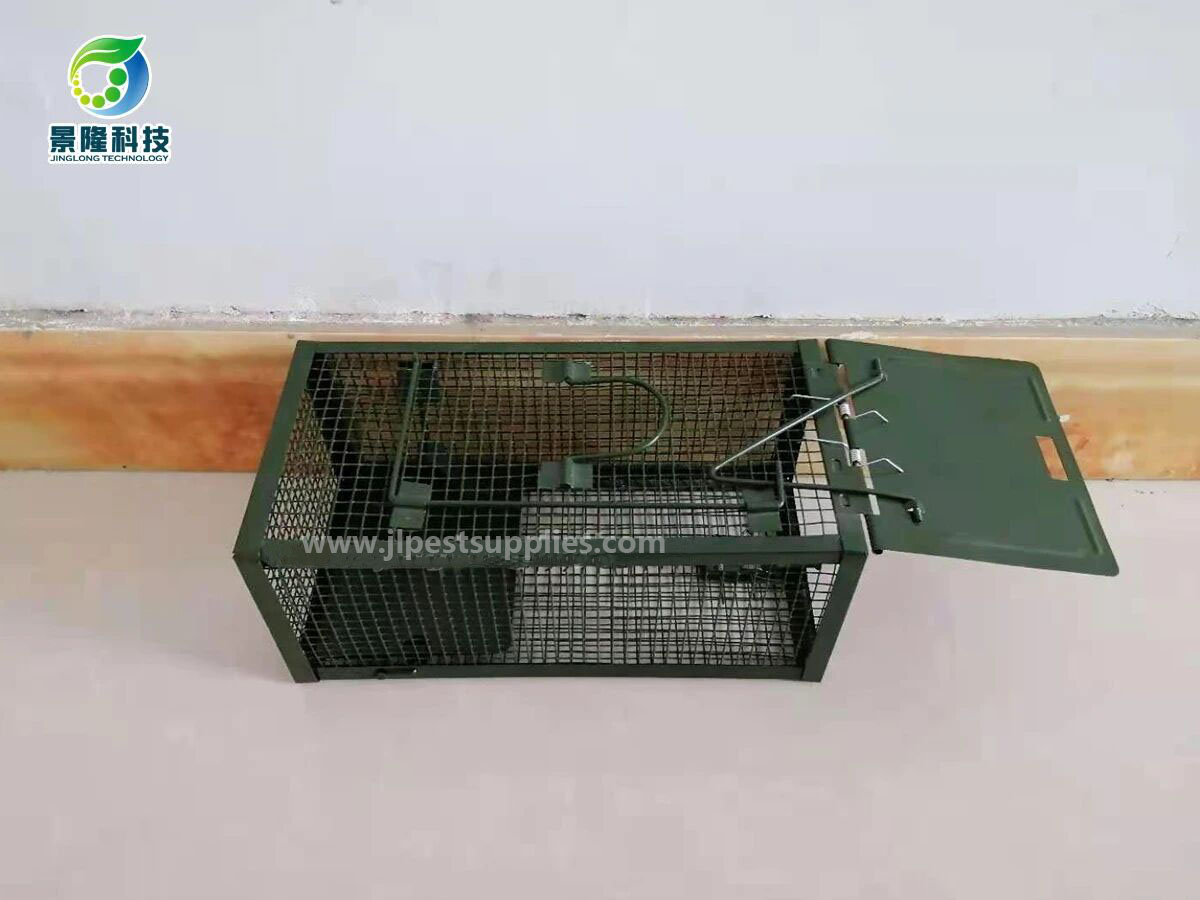
Scientific Operation:
*Place them along the “frequently traveled paths” of rodents such as walls, equipment bases, and pipe roots, with the trap door facing the direction of rodent activity (e.g., when placed along a wall, the trap door is close to the wall);
*Keep a distance of at least 1 meter from food contact areas (such as raw material areas, production lines), or isolate them with rat-proof boards (height ≥ 60cm) or enclosed barriers;
*Adjust the placement position every 3-7 days according to rodent activity traces (such as mouse droppings, bite marks) to avoid long-term fixation.
Adhere to the three principles of “aligning with rodent habits, strictly observing safe distances, and dynamically adjusting positions”, which can not only improve rodent-catching efficiency but also avoid the risk of food contamination and ensure production safety.
JingLong Making Pest Control Easier
Post time: Dec-15-2025