JingLong Making Pest Control Easier
Usage Tips for Small Animal Traps Cage
I.Precise Trap Placement to Boost Capture Efficiency
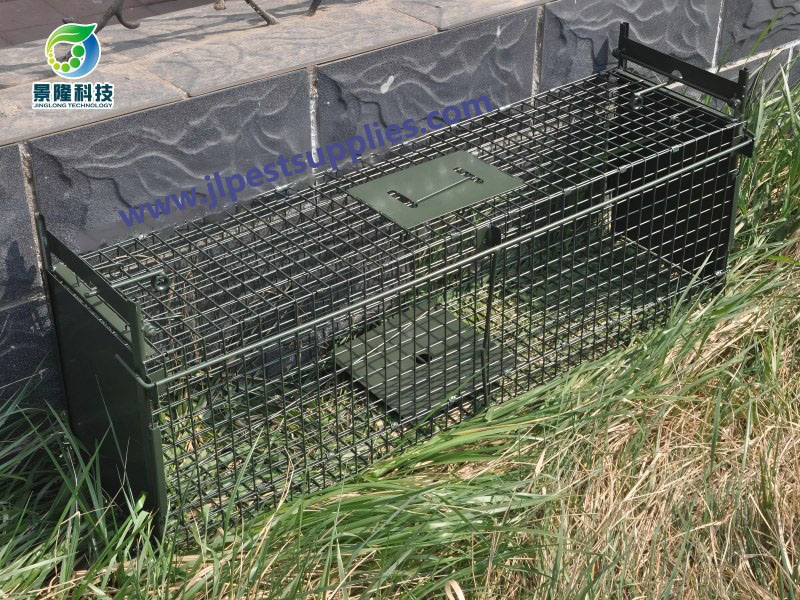
II.Precise Trap Placement to Boost Capture Efficiency
Choose the bait according to the habits of the target animal; for example, use cat food when trapping cats.
When placing the bait, put it on the pedal deep inside the cage to prevent the animal from accessing it outside the cage. You can adopt a step-by-step guidance method: sprinkle a small amount of food outside the cage door and at the entrance to gradually guide the animal into the trap cage and trigger the mechanism.
III.Debugging of Mechanism Sensitivity and Mis-trigger Prevention
Before use, gently press the pedal to test the mechanism, ensuring that the cage door closes quickly and the latch locks securely. If the sensitivity is insufficient, fine-tune the angle of the linkage rod. For multi-animal environments, select a trap cage that is only suitable for the target animal’s size to avoid accidentally capturing poultry or pets. When deploying the cage outdoors, place a heavy object (such as a stone) on top of the cage to prevent mis-triggering caused by wind or contact with small creatures.
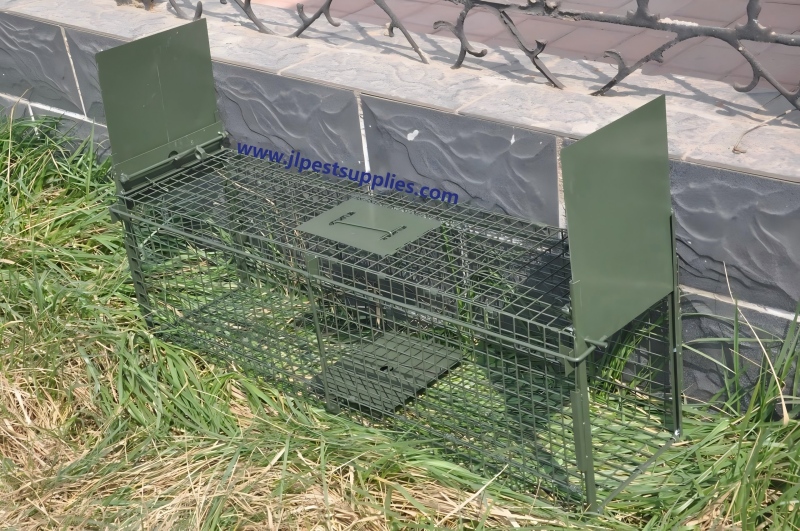
Jinglong Collapsible Live Trap Series JL-2010 Cat trap cage
IV.Adaptation of deployment time and environment
Most small animals (such as weasels and wildcats) are active at night. It is recommended to control them in the evening and check them the next morning to increase the probability of capture. In humid environments, a waterproof pad can be placed at the bottom of the small animal capture cage to protect metal components from corrosion; In low temperature weather, a small amount of hay can be laid inside the cage to increase the willingness of animals to enter, while avoiding frost on the trap that affects the flexibility of the mechanism.
V.Reduce “neophobia” and lower vigilance
Before using a new trap cage for the first time, place it in the target area for 1 to 2 days to allow the animals to get familiar with its presence. If the cage has a noticeable odor (such as a metallic smell), rinse it with clean water and let it dry first, or wipe the cage with local soil or fallen leaves to impart ambient scents to it. Avoid moving the trap cage frequently; minimize human interference as much as possible after deployment. If necessary, leave a small amount of animal feces or scent markers around the cage to enhance the animals’ sense of trust.
VI.Scientific Handling After Capture to Ensure Safety and Reusability
- When transferring captured animals, keep the trap cage stable to prevent the animals from having stress-induced resistance caused by violent shaking.
- When releasing the animals, select a natural environment far away from human activity areas, open the cage door slowly, and do not gather around to watch at close range.
- When cleaning the trap cage, use a neutral detergent to remove bait residues and odors, then dry it thoroughly before storage to avoid residual smells affecting the effectiveness of the next use.
- For long-term storage, fold and store the cage properly and conduct rust-proofing treatment to extend its service life.
Post time: Feb-03-2026