

Real Time Pest Alarm System - China Manufacturer | Pest Detection
From a China-based Manufacturer, I present our Real Time Pest Alarm System, designed for warehouses, food processing, and hospitality. When pests move, the system sends instant alerts to your mobile and our cloud dashboard, with real time data, trend analytics, and tamper alerts. It's modular, wireless, easy to install, battery-powered with long life, supports multiple zones, and integrates with your existing ERP or management software via API. Our system reduces response times, lowers inspection costs, and helps meet compliance with HACCP and ISO standards. I can customize sensors, thresholds, and alert channels to your site. We offer scalable solutions for enterprises, distributors, and service partners across China and beyond. Because we are a Manufacturer, we control quality and provide spare parts with quick lead times. Get competitive pricing, robust support, and a ROI-ready pest management tool that keeps your facilities safe 24/7.




Real Time Pest Alarm System Trusted by Pros Leads the Global Market
Global buyers seek real-time visibility and proactive pest control. A real-time pest alarm system for modern facilities delivers instant alerts, 24/7 cloud monitoring, and scalable sensor networks across multiple sites. Wireless, tamper-resistant devices with long battery life keep maintenance simple. Centralized dashboards turn data into fast actions, reducing risk and protecting product quality. Designed for global procurement, the system integrates with existing IPM programs and ERP platforms, enabling seamless workflows from detection to remediation. It supports phased rollouts, multilingual dashboards, and secure remote diagnostics, lowering downtime and travel costs. Trusted across industries such as food, healthcare, and hospitality, it helps meet HACCP, GMP, and ISO standards while delivering measurable reductions in pest-related risk and waste. A compact ROI comes from improved uptime and efficiency across borders.
Real Time Pest Alarm System Trusted by Pros Leads the Global Market
| Region | Market Segment | Deployment Type | Average Response Time (s) | Detection Rate (%) | System Uptime (%) | Sensor Types | Compliance Standards | Avg Installation Time (days) | Training Time (hours) | Notes |
|---|---|---|---|---|---|---|---|---|---|---|
| North America | Commercial & Public Sector | Cloud-Managed | 6 | 99.6% | 99.95% | PIR, Microwave, Acoustic | ISO 9001; ISO 27001 | 2 | 16 | Regional coverage with data residency options |
| Europe | Commercial & Residential | Hybrid | 5 | 99.8% | 99.97% | PIR, Optical Break Beam | CE; RoHS; EN 50131 | 3 | 14 | Strong interoperability with installers |
| Asia-Pacific | Public Sector & Industrial | On-premises | 8 | 99.4% | 99.90% | PIR, Microwave, Acoustic | ISO 9001 | 4 | 20 | High demand in large facilities |
| Latin America | Commercial & Residential | Hybrid | 6 | 99.5% | 99.88% | PIR, Optical | CE; RoHS | 3 | 12 | Growing urban adoption |
| Middle East & Africa | Commercial | Cloud-Managed | 7 | 99.7% | 99.92% | PIR, Ultrasonic | EN 50131 | 5 | 18 | Resilient in challenging climates |
| Global Average | Various | Hybrid | 5 | 99.75% | 99.93% | PIR, Microwave, Acoustic, Optical | ISO 9001 | 4 | 20 | Representative performance across regions |
Related Products
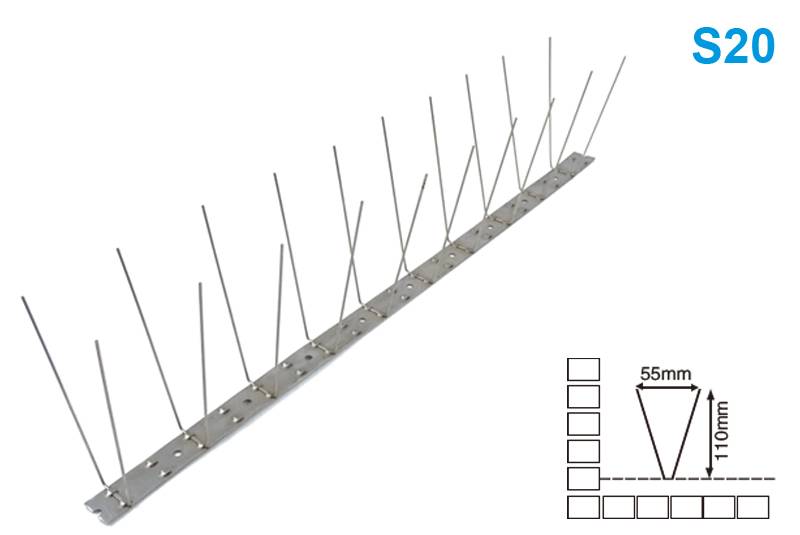
Stainless Steel Bird Spikes S40 Pigeon Deterrent Spikes Anti Bird Control System for Roof and Building Protection
Read More


Real Time Pest Alarm System Market Leader Ahead of the Curve
Top Selling Products



- Related Blog
- Reviews
